The events of spyweek might be over for another year, but we’ve still plenty of spy-news to share with you with this week’s guest blogger Joseph Oldham.
Having spoken at Spyweek2017, Joseph Oldham is author of Paranoid Visions. This week, he is sharing his insights into John Le Carre on the big screen.
–
John le Carré and the British Television Spy Drama
These days fans of John le Carré are spoiled for televised adaptations of their favourite author’s work. Production company The Ink Factory is following up on the popular success of The Night Manager (2016), with new dramatisations of his Cold War classic The Spy Who Came in from the Cold (1963)[1] and his exploration of Arab-Israeli conflict, The Little Drummer Girl (1983)[2]. As with The Night Manager, the BBC is on board as UK broadcaster for both, connecting the new cycle of adaptations with a prestigious heritage – the in-house BBC adaptations of Tinker Tailor Soldier Spy (1979) and Smiley’s People (1982) starring Alec Guinness as George Smiley. As the Telegraph review for The Night Manager commented, these ‘are still the espionage dramas against which all contenders must be measured’.[3]
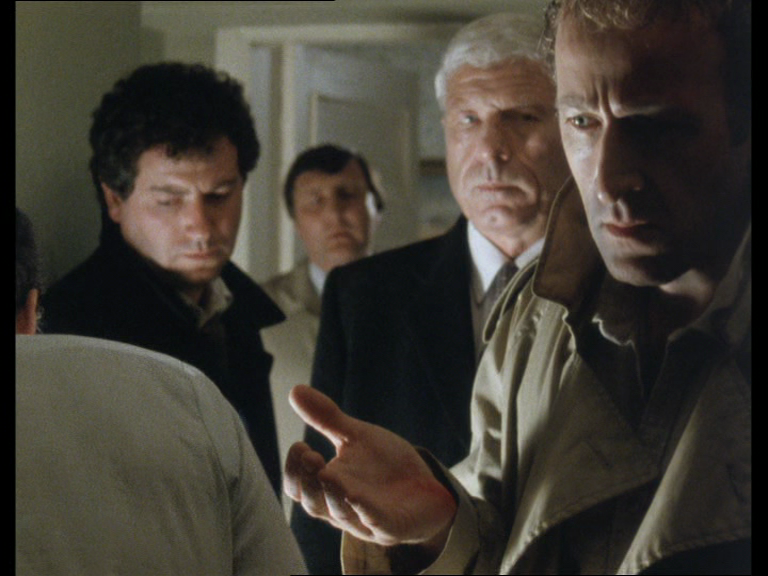 (Edge of Darkness)
Le Carré’s relationship with television drama extends back further than is often realised and did not in fact begin with the BBC. In 1966 Associated-Rediffusion adapted a little-known le Carré short story Dare I Weep, Dare I Mourn?[4] into a little-remembered television film.[5] Set around the same hostile Iron Curtain landscape as The Spy Who Came in from the Cold, this depicted a West German businessman’s reluctant involvement in a perilous scheme to smuggle his estranged, abusive father out of the GDR. In the lead role of Otto Hoffman was James Mason, who also starred in the same year’s The Deadly Affair (1966), a film adaptation of le Carré’s debut novel Call for the Dead (1961).
Subsequently le Carré made a unique excursion into original television writing with The End of the Line, a Pinter-esque play about a confrontation between a fugitive atomic spy and a mysterious clergyman set entirely within a railway carriage. This tense psychological drama anticipated the focus on long conversations and interrogations that would become a celebrated feature of the Tinker Tailor adaptation a decade later. Le Carré initially submitted this play to the BBC where it was rejected, to be produced instead by Thames Television in 1970. Two decades later, the author loosely reworked it into an interrogation/confession sequence in The Secret Pilgrim (1990).
The BBC’s aversion to this play may have stemmed from the wider reputation of the spy drama in the 1960s. On television this genre was then dominated by glossy, formulaic and escapist ITV adventure series such as The Avengers (1961-69) and The Saint (1962-69). At a time when the Reithian spirit of its public service remit was a stronger force, the BBC may have been reluctant to embrace a genre that, in the shadow of James Bond, had developed such strongly commercial associations. Yet from the turn of the 1970s a new wave of more grounded, psychological and anti-heroic ITV spy series such as Callan (1967-72) and The Sandbaggers (1978-80) helped to create a climate in which le Carré’s work would become more congruent.
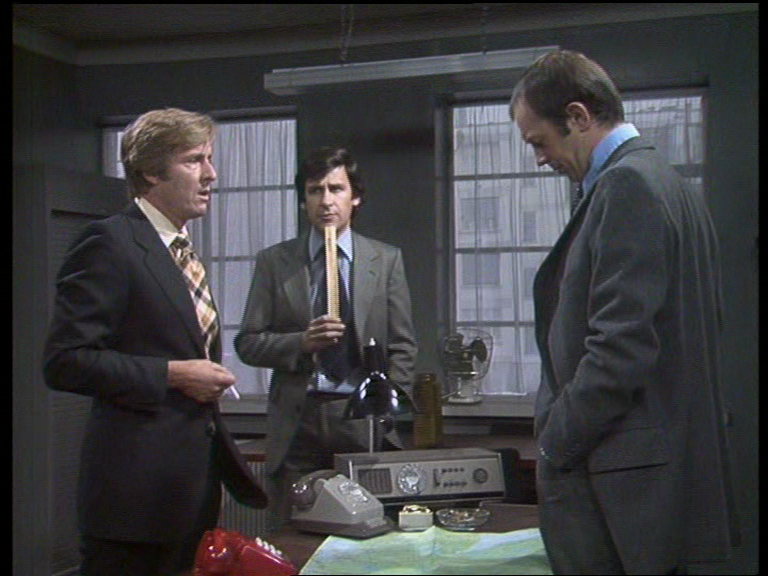 (The Sandbaggers)
The BBC’s growing interest in le Carré was illustrated when he became the subject of an episode of The Lively Arts[6] to coincide with publication of The Honourable Schoolboy (1977). This included a short dramatised excerpt of Call for the Dead in which Arthur Lowe became the first actor to portray Smiley on television. Le Carré recently recalled this during last year’s Royal Festival Hall appearance, An Evening with George Smiley, indicating that the sequence also served as a screen test for the BBC adaptation of Tinker Tailor, then in early stages of pre-production. The author described how, despite a creditable performance, Lowe’s association with Dad’s Army (1968-77) made his interpretation impossible to take seriously. Nonetheless, an exchange of letters between le Carré and Guinness held in the BBC Written Archives Centre indicate that Lowe had made enough of an impression to give Guinness serious concerns about taking the part.
As I have explored in my book Paranoid Visions: Spies, Conspiracies and the Secret State, the adaptation of Tinker Tailor would have seismic effects on the British television spy drama. This was the moment when initiative in this genre largely shifted from ITV to the BBC, and when a closer connection was forged to trends in the spy novel. It was the beginning of a new landscape in which espionage could increasingly be the topic of ‘serious’ prestige drama with complex narratives developed over multiple episodes. This not only led to new spy novel adaptations (including Smiley’s People and le Carré’s A Perfect Spy, 1987) but also influenced developments in original drama. Troy Kennedy Martin, writer of the acclaimed six-part nuclear thriller Edge of Darkness (1985), credited Tinker Tailor with ushering in a landscape in which such a production was viable.
Following a Thames adaptation of A Murder of Quality (1991), Le Carré’s work disappeared from television for 25 years. His influence was felt in the intervening years, however, most obviously in the BBC procedural spy series Spooks (2002-11). Stephen Garrett, who initiated this series, was an avowed le Carré fan who used the author’s work as the basis for a new twist on the precinct drama.[7] Le Carré was unimpressed, however, particularly at the series’ incorporation of action and glamour, and dismissed Spooks as ‘crap’.[8] This did not prevent Garrett from becoming Executive Producer on The Night Manager which, with its lavish international location filming, would ultimately prove a far more glamorised production.
The new le Carré adaptations are in fact just part of a drift back to the more ‘novelistic’ style of British spy drama, composed of extended but ultimately contained miniseries. This includes both adaptations, such as of William Boyd’s Restless (2012) and Charles Cumming’s A Foreign Country (forthcoming),[9] and original works of a similar scope such as Hugo Blick’s The Honourable Woman (2014) and Tim Rob Smith’s London Spy (2015). In contrast, there has been little evidence of attempts to create a new long-running spy drama to succeed Spooks or to rival the US series Homeland (2011-). The influence of le Carré on the British television spy drama may therefore stand as even more formidable force than at any previous time.
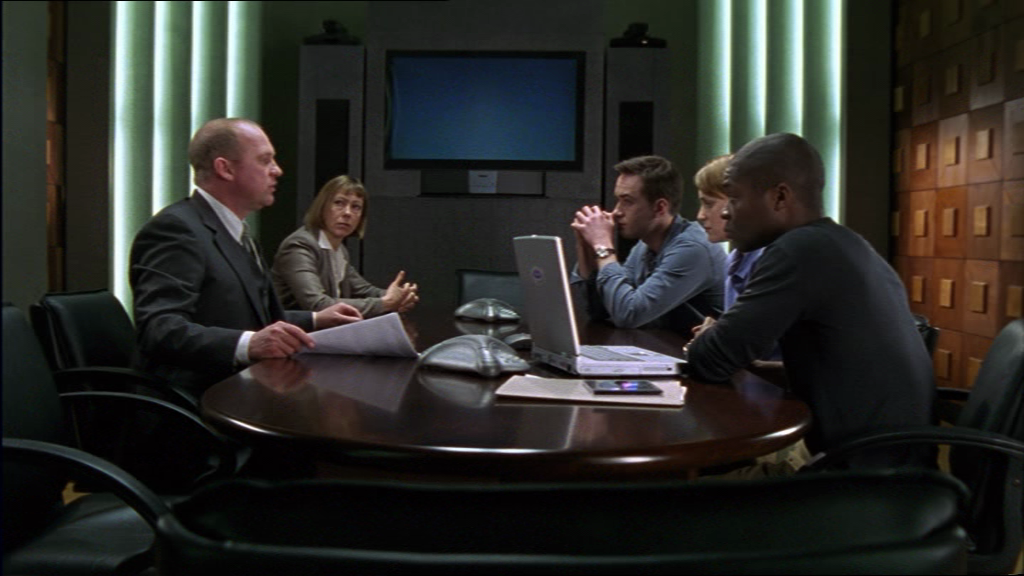 (Spooks)
[1] http://www.bbc.co.uk/news/entertainment-arts-38630220
[2] https://inkfactoryfilms.com/projects/the-little-drummer-girl/
[3] https://www.telegraph.co.uk/tv/2016/02/19/the-night-manager-episode-1-event-drama-of-the-highest-calibre/
[4] https://www.amazon.co.uk/Dare-Weep-Mourn-Singles-Classic-ebook/dp/B01IFH6UW6/
[5] https://player.bfi.org.uk/rentals/film/watch-dare-i-weep-dare-i-mourn-1966-online
[6] http://genome.ch.bbc.co.uk/1bdb93f8b8c847e4bcee57b0f013b7bc
[7] https://www.independent.co.uk/arts-entertainment/tv/features/stephen-garrett-spooks-producer-on-his-obsession-with-spy-stories-and-working-with-john-le-carr-a6872226.html
[8] https://www.theguardian.com/books/2011/sep/16/le-carre-spy-spooks
[9] https://www.standard.co.uk/lifestyle/books/thomas-kell-writer-thrilled-at-deal-with-colin-firth-for-night-managerstyle-tv-series-a3253396.html