As we enter our final event of Spyweek2018, Professor Penny Fielding of The University of Edinburgh gives us an insight into Spies vs Detectives
_
As we head into our final Spy Week event, I’m going to introduce the topic of spies vs detectives by looking at two novels published within a couple of years of each other. But first, a few rough ideas about the differences between these genres.
The detective novel starts with a traumatic event (typically a murder). Then we follow a sequence of clues, getting some right and some wrong, until the detective tells us what really happened. Detectives are usually pretty recognisable characters—even iconic—and they tend to be associated with specific places: Holmes and London, Rebus and Edinburgh. When we finish a detective story, we know where it happened, how it happened, and why it happened. Espionage novels take place in much less familiar settings as spies roam rootlessly around the world. And when a spy novel ends, we may know that some things have changed, but we are often left with the lingering sense that the secret world will close over the heads of the protagonists and that nothing is really ‘solved’.
To glimpse how this might work in practice, we can look at these differences in two novels that have a strangely entangled publishing history.
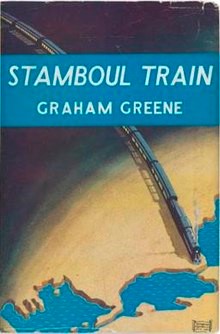
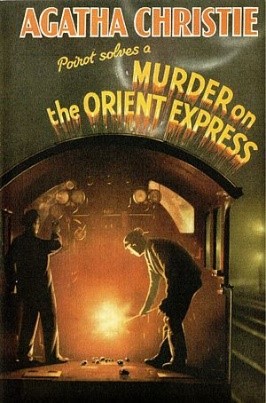
In 1932 Graham Green published a novel called Stamboul Train. The US title was Orient Express and in 1934 it was made into a film with this title. Also in 1934 Agatha Christie published a novel with UK title Murder on the Orient Express but, in order to distinguish it from Greene’s book, the US title was Murder on the Calais Coach. Confused? Let’s separate the two novels by the way they fall into the detection/espionage modes.
The first edition cover of Christie’s novel added some words to the title: ‘Poirot solves a Murder on the Orient Express’. So we know from the start that there’s a murder, that it will be solved, and that the solving will be done by an iconic detective. In fact, this novel has one of the most memorable solutions of all crime novels—they ALL did it! The novel ends with Poirot giving us the story of what really happened and proclaiming: ‘having laid my solution before you, I retire from the case.’ The story is over, the case is closed, and Poirot moves on.
Despite the journey through Europe, Murder on the Orient Express centres on one location, the train. There are a set number of characters in a confined space and we are rightly confident that the culprit will be found among them.
Although Stamboul Train takes the same geographical route, it’s a very different kind of novel. Drenched in secrecy and subterfuge, the novel has no single, recognisable spy figure other than the underground communist Richard Czinner, heading home on a forged passport. Where the passengers in Murder on the Orient Express have a single, secret purpose, Greene’s novel throws together characters who are united only by chance. Christie cares about her characters as they fit into the murder plot. Greene’s passengers reflect a pre-war Europe without a clear identity and where political thought has been replaced by empty clichés, show trials or sensational reporting in the press.
As the train steams through all the disintegrated empires of Europe—Napoleonic, Austro-Hungarian, Ottoman–we feel we’re in a Europe in which history is not fixed. And in place of a detective to make sense of it all, we have only Czinner, the character who should link us to European political history, and who forms the main spy thriller element of the story, but who cannot articulate why he is there: ‘”If I could sleep”, he thought with longing, “I could remember more clearly the things that have to be remembered.”’
Of course not all novels fall as easily into such categories. Denise Mina and Mick Herron, who are appearing at our spies vs detectives event, certainly don’t. But to see how authors break down expectations, it’s interesting to start by thinking what those generic expectations are.